
RECOMMENDED PRODUCTS


“Market Manipulation” Theme (II): Prolonged Gains Raise Suspicion; Robust Trading May Be Deceptive

Source: Shenzhen Stock Exchange Investor Education Center
In stock trading, most investors exercise heightened caution toward stocks that exhibit unusually large daily price gains or volatility, believing that, absent positive announcements or favorable policy developments, such stocks are likely to be subject to market manipulation. By contrast, it is often more difficult to determine whether market manipulation is at play in stocks that show modest daily gains or volatility but have nonetheless posted a strong upward trend over a sustained period. Many investors wonder: if someone merely engages in repeated buying and selling of a particular stock without noticeably affecting its intraday price, could this still constitute market manipulation? The following case provides an answer to this question.
July 2015 month 10 Date to 8 month 28 Day, stock “ X "’s" For details on the K-line chart, please refer to the figure below:
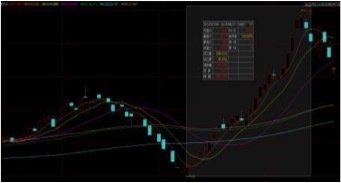
Over the course of just over a month, the share price of stock “X” rose continuously—was this a reflection of the company’s true value, or was there another story behind the trading? The China Securities Regulatory Commission’s penalty decision sheds light on the reasons for the stock’s surge: Zhongxin Fuying is a private fund management company that, in its capacity as an investment advisor, operated “…”. A Trust ——Hongying 206 "Number" and so on 11 A securities account, with actual investment decisions made by Li Moumou; Wu某某 controls “ A Trust—“Phoenix Flower Fragrance No. 2,” among others 18 a trust account and 4 Each one Individual account. Zhongxin Fuying and a certain individual, surnamed Wu, colluded to trade the stock “ X “Seeking profit. In” 7 month 10 Date to 8 month 28 day's 35 Within a single trading day, the accounts controlled by Zhongxin Fuying and Mr. Wu There are no indicators on a daily basis that clearly trigger short-term manipulative practices such as pump-and-dump schemes, price suppression, or wash trading; however, Through related trading activities, they actually turned a profit in each case. 1.47 RMB 100 million and RMB 174 million. The CSRC has determined that the illegal trading activities conducted by Zhongxin Fuying and the account controlled by Mr. Wu include:
1. Continuous trading
- There are instances where the buy volume accounts for more than 10% of the market’s total trading volume. 25 trading days, exceeding 20% There is/are 18 a trading day, exceeding 30% There were 6 trading days.
- Those with purchase amounts exceeding RMB 10 million are: 29 trading days, exceeding 5,000 There are those worth ten thousand yuan. 12 Individual transaction Easy day, over 10,000 There were six trading days with a value of 10,000 yuan.
- The stocks whose sell volume accounts for more than 10% of the market’s total trading volume include: 13 trading days, exceeding 20% There is/are 7 a trading day, exceeding 60% There are 2 trading days.
- Holding of stock “X” exceeds its outstanding shares by 10% There were 13 trading days.
2. Trading among accounts under actual control
- Trading stock “X” among securities accounts under its actual control. 712 shares, accounting for a share of the market’s total trading volume exceeding 5% There are 5 trading days.
Article 77, Paragraph 1, Items (1) and (3) of the Securities Law define two types of market manipulation: “individually or through collusion, concentrating financial resources, shareholding advantages, or leveraging informational advantages to engage in joint or consecutive buying and selling,” and “conducting securities transactions between accounts actually under one’s own control,” thereby influencing securities prices or trading volumes. In this case, Zhongxin Fuying and Wu Moumou simultaneously engaged in both of these practices. The duration of continuous‑trading manipulation is typically lengthy, and transactions among accounts under one’s actual control do not transfer ownership of the securities; they merely create the illusion of active trading. Compared with short‑term manipulative tactics such as price‑pumping and price‑squeezing, continuous‑trading manipulation and manipulation through transactions between accounts under actual control are more covert, requiring careful analysis and judgment to detect such illegal conduct.
When investing in the market, investors should adopt a rational approach that aligns with the law of value, conduct冷静 analysis based on market conditions, industry trends, and company fundamentals, and remain vigilant against being misled by manipulators who create an illusion of brisk trading and gradual price increases, thereby avoiding investment losses.
(Disclaimer: The information provided in this column does not constitute any investment advice. Investors should not rely on such information in lieu of their own independent judgment or make decisions solely based on it. The contributors endeavor to ensure the accuracy and reliability of the information presented in this column, but they do not guarantee its… Accuracy 、 Integrity and Do it promptly. out Any warranty , Also Not due to to make Using information from this column send Assumption of Losses Responsibility 任 。 )
Key words: